
Enzo Farinella – Irlanda e Lombardia
Intervento di Enzo Farinella
sugli antichi legami culturali e religiosi tra Irlanda e Lombardia
Dungal in Pavia
Dungal, who worked with Alcuin at Charlemagne’s Court and who won the King’s respect and trust, was dispatched to Pavia, the capital of the Longobards and afterwards of the Franks, to preside over the famous local Palatine School.
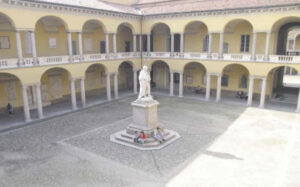 King Lotar ordered with the Capitulary of Corteolona, in the year 825, that this School was the most important of his Kingdom. All young people from Milan, Bergamo, Brescia, Novara, Lodi, Asti, Vercelli, Tortona, Acqui, Genoa, Como, had to continue their higher studies in this College – «ln Pavia conveniant ad Dungalum» as the Capitulary stated, presided by Dungal. The present University of Pavia – established officially in 1361 and up to the aftermath of the First Wortd War being the only College for Milan and for all of Lombardy -, continues to celebrate its long standing ancient origins, at the beginning of every academic year. So we can say that an educated Irish man is found at the birth or the beginning of the University of Pavia and of the education system of the Kingdom of Italy in the late middle Ages.
Dungal, remembered as well for his letter on the nature of eclipses, addressed to the Emperor Charlemagne, and for his rebuttal of the iconoclasm advocated by Bishop Claudius of Turin, at the end of his teaching activity decided to retire in Bobbio in the monastery founded by his compatriot St. Columbanus. On his death he left his books to the library of the same monastery and already about 30 Codex have been recognised as belonging to Dungal. Most biblical commentaries between 650 and 850 were written by Irishmen. They elaborated true master-pieces of calligraphy, like the Book of Kells, perhaps the most beautiful manuscript in the world, produced between the 8th and 9th century. They excelled also in other precious arts, such as sculpture, metal relief, crosses, chalices, cases for keeping books, etc. The ornamental arts reached their peak in pagan and Christian Ireland with fine metal artefacts; gold appears in jewellery and in plated arms along with silver and other precious elements.
Many classics would have been lost without the patient work of such monks in their land and abroad, as the Renaissance showed. The manuscripts of these illuminators and their style of writing formed the treasure of the most important European libraries, including the Ambrosiana of Milan.
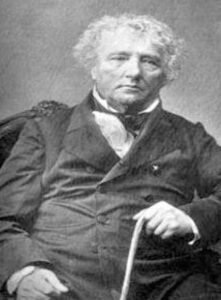 The Lombardy Region gave to Ireland a man, who up to our days has been highly respected and recently he was honoured with a commemorative stamp: Carlo Maria Bianconi (1798-1875). Born in Tregolo, the present Costamasnaga (Lecco), he reached Ireland at the age of 16, in 1802. In a little more than 35 years, he revolutionised the Irish transport system on the island with his coaches pulled by horses. He set up in Clonmel, becoming Mayor of the town. At the end of the Napoleonic wars, when horses were no longer requested for operation of transport and war, he bought a horse and a coach for 10 pound sterling and in this way he started his famous fleet of carts, which started to link the various parts of Ireland. In 1837 Carlo Maria Bianconi owned 900 horses and 67 coaches.
The links between Ireland and Italy were always characterised by a serene friendship and a mutual admiration in the various sectors of life.
However St. Columbanus is the golden bridge that brings together the two countries and the three towns of Bobbio, Navan and Bangor at the dawn of a new Europe.
Bobbio, a natural cross-road of the most important communications pathways during the Middle Ages, became with Columbanus the capital of monastic culture and the centre, for many centuries, of religious, philosophical, scientific, artistic and social life. Religion and monasticism flourished with him throughout Liguria and Lombardy. In 614, Columbanus arrived in Bobbio. With him, Bobbio enjoyed an intense social and economic life. The place became a city first and later a County with its Cathedral, which was a symbol of power. Here, Columbanus, in the autumn of the year 614, at the end of his restless wanderings in search of solitude, built a great monastery, renowned all over Europe as «the Montecassino of the North», whose splendour lasted up to the most glorious days of Bobbio. Codexes copied in Bobbio’s scriptorium in the 8th century can be admired now in the Ambrosina Library of Milan. The Antiphonary of Bangor was brought by St. Columbanus from Bangor. Others are to be found in the Vatican Library and in the National Library of Turin and Genoa. With Napoleon the Library of Bobbio was ransacked and many of its sacred books were burned or given to lay people or simply lost to culture in general.
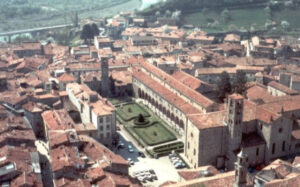 Petrarch and Muratori found in Bobbio’s Capitular Archive 150 Latin manuscripts, written before the 7th century. Bobbio is situated in the heart of Northern Italy. It’s also a river that joins the banks of the River Trebbia, where Hannibal once suffered a severe loss of men, horses and elephants, while passing the winter there. It is part of the Province of Piacenza, not far from Milan, Genoa, Turin and other major cities.
Clonmel is linked to Italy also through Carlo Maria Bianconi, who became an impresario, from an itinerant trader position, as we said previously, taking up residence in Clonmel. He revolutionised the transport system in Ireland, developing a large transport network based on horse-drawn carriages and also starting the first postal service in Ireland. In the middle of the 19th century, this Lombard pioneer employed 100 coachmen to guide his 100 carriages and more than 1.400 horses, which connected 140 postal stations. His services covered 4.500 km daily.
Some particularly propitious circumstances helped Bianconi in this enterprise. At the end of the Napoleonic wars, when there was no longer the need of horses for transport and war, he bought a horse and a carriage for 10 pounds and started in this way his famous fleet of carriages which linked the various parts of Ireland.
Tregolo, now Costamasnaga, where Bianconi was born, and Clonmel, the one in Lombardy and the other in Tipperary, joined in a twinning in 1986, on the 200th anniversary of his birth, to celebrate his memory in the Europe of the peoples.
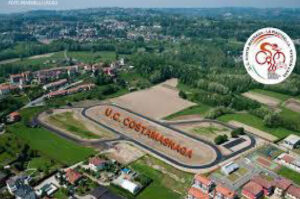 Costamasnaga is a small town in the Province of Lecco, but through one of its citizens, Gioacchino Giuseppe Carlo Maria Bianconi, who migrated to the town of Tipperary in 1802, is linked to Clonmel. His adventures as a young man brought him there. It seems that his father, Peter, wanted to avoid a scandal in Tregolo: his son had fallen in love with a young lady promised as a bride to a local nobleman. Thus, the father took the decision of sending him away from Tregolo and entrusted him to one of his friends, Andrea Faraoni, dealer in printed matter and artistic reproductions, so that he may guide him in the sales skills in the far away Ireland.
Carlo together with three other friends, all of them apprentice salesmen, worked at the beginning in the Temple Bar area of Dublin, where Faraoni was staying. The young itinerant trader, 35 years later, reached the position of impresario, taking up residence in Clonmel, the capital of Tipperary.
At the age of 40, by now famous and rich, he married Eliza Hayes, by whom he had three children. Unfortunately one of the two girls, Catherine, died when she was 25 years of age, and the same happened to his son Charley, 32 years old.
Besides this family misfortunes, his business prospered. In the middle of the 19th century, this Lombard pioneer employed 100 coachmen, 140 postal stations, 100 carriages and more than 1.400 horses. His services covered 4.500 km daily.
Bianconi was Mayor of Clonmel for two consecutive years – the Mayors in Ireland alternate every year –. Ireland celebrated his fame with a commemorative stamp that features his first carriage in the bicentenary of his birth.
He was also a sincere friend of Daniel O’Connell, the great Irish lawyer, who in 1829 won Catholic Emancipation for the Irish. He erected a mausoleum for O’Connell who died in Genoa during a trip to Rome. Built inside the Irish College in Rome, the mausoleum is the resting-place of the heart of the Irish Liberator.
Carlo Bianconi died at the age of 89.
Bobbio’s history is quite interesting, going from the Neolitic period, 5.000 years ago to the Ligurians’ conquest (1.100 B.C.). The Celts named it Bobbio in the 5th century B.C. and, just a few years before Christ, it became part of the Roman Empire. The Celts left their mark in names of local places. The saltus Boielis of the Veleja table derives from Boj, transformed later in Boielis, Bouium, Bovium and finally in Bobbium.
During the middle Ages the Abbey became a cultural centre of primary importance. In the 10th century, more than 700 manuscripts existed in its scriptorium. Unfortunately, of those, only 243 remain, most of them in the Ambrosiana Library of Milan and in the Vatican.
In the first half of the 14th century, Bobbio came under the control of the Malaspina family, who recently promoted the twinning with an Irish town. Later on, Bobbio came into the possession of the state of Milan. Among its major monuments, we recall Ponte Vecchio – the Old Bridge, also called Gobbo (Hump) or Del Diavolo (of the Devil); 280 metres long and with eleven unequal arches – and the Basilica of St. Columbanus, rebuilt in the 15th century.
Devotion towards St. Columbanus spread all over Italy and beyond. Als in the Catedral of Monreale in Sicily there is a mosaic of the Saint at the entrance St. Paul’s chapel. It was in Bobbio that Columbanus fron Country Meath, from Bangor, from Luxeuil, from Europe, died on the 23rd November, 615.
